A Renter's Guide to Wall Sconces You Don't Need an Electrician For
Wall-mounted light without opening a wall. What plug-in actually means, where the cord goes, and the three fixtures that do it well.
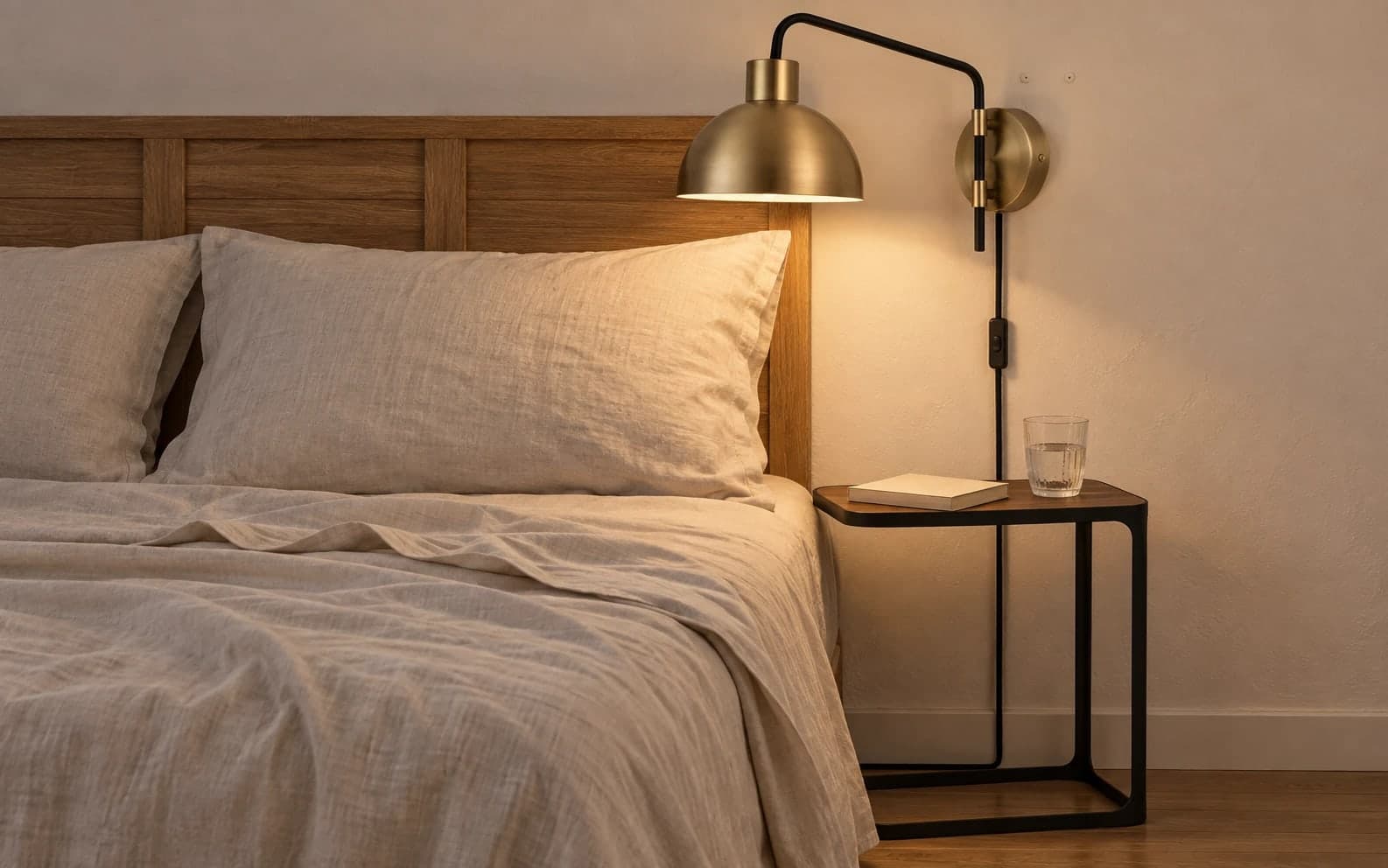
The lighting in a rental is decided by whoever wired it, and they were not thinking about where you would put the bed. The overhead fixture is in the middle of the ceiling, the outlets are wherever the builder found convenient, and the lease says nothing gets rewired.
A plug-in sconce is the way around all three. It mounts to the wall like a picture, it plugs into an outlet like a lamp, and it comes down when you leave with nothing to patch but two small holes. Here is what actually matters when choosing one.
What plug-in means, and what it does not
A plug-in sconce has a cord. That is the whole definition. The fixture itself is identical to a hardwired one; the difference is that instead of a wire disappearing into the wall, a cord runs down from the fixture to an outlet.
Some are plug-in only. The better ones are convertible: they ship with a cord and a plug, but the cord can be removed and the fixture hardwired later if you ever own the walls. Buy convertible if the price is close. It is the same fixture with a second life.
What plug-in does not mean is dim or flimsy. The bulb is the same, the socket is the same, the light is the same. The only thing you are giving up is a wall switch — and most come with an in-line switch on the cord, which is arguably better, because it is where your hand already is.
The cord is the whole design problem
Everything about where a plug-in sconce works comes down to one question: where does the cord go?
The honest answer is down the wall to the nearest outlet, and you should plan for that being visible. A black fabric cord against a pale wall reads as intentional. A white plastic cord reads as an extension lead. This is why the good fixtures come with fabric-covered cords — it is not decoration, it is the difference between a sconce and a lamp taped to the wall.
Three placements that work:
Bedside, above a nightstand. The nightstand hides the outlet and most of the cord. Mount the sconce at about 60 inches from the floor, roughly shoulder height when sitting up in bed. This is the classic use, and it frees the nightstand for a book and a glass.
Over a reading chair. Same height logic, cord running down beside the chair to a floor outlet. The chair hides the outlet; the cord becomes a vertical line that the chair's back covers.
Either side of a mirror. In a bathroom or entry with no vanity light. The mirror is between the two cords, so they frame it rather than cross it.
Where it does not work: a bare wall with an outlet six feet sideways. The cord will run diagonally and no fixture can save that. Buy a floor lamp instead.
Two sconces built for this
Both of these ship with a fabric cord and an in-line switch, both mount with two screws, and both are convertible to hardwired later. The choice between them is finish.
The first is antique brass with a matte black arm — enough contrast to stand out against a cream wall, warm enough not to look industrial. It is the one to choose for a bedroom.
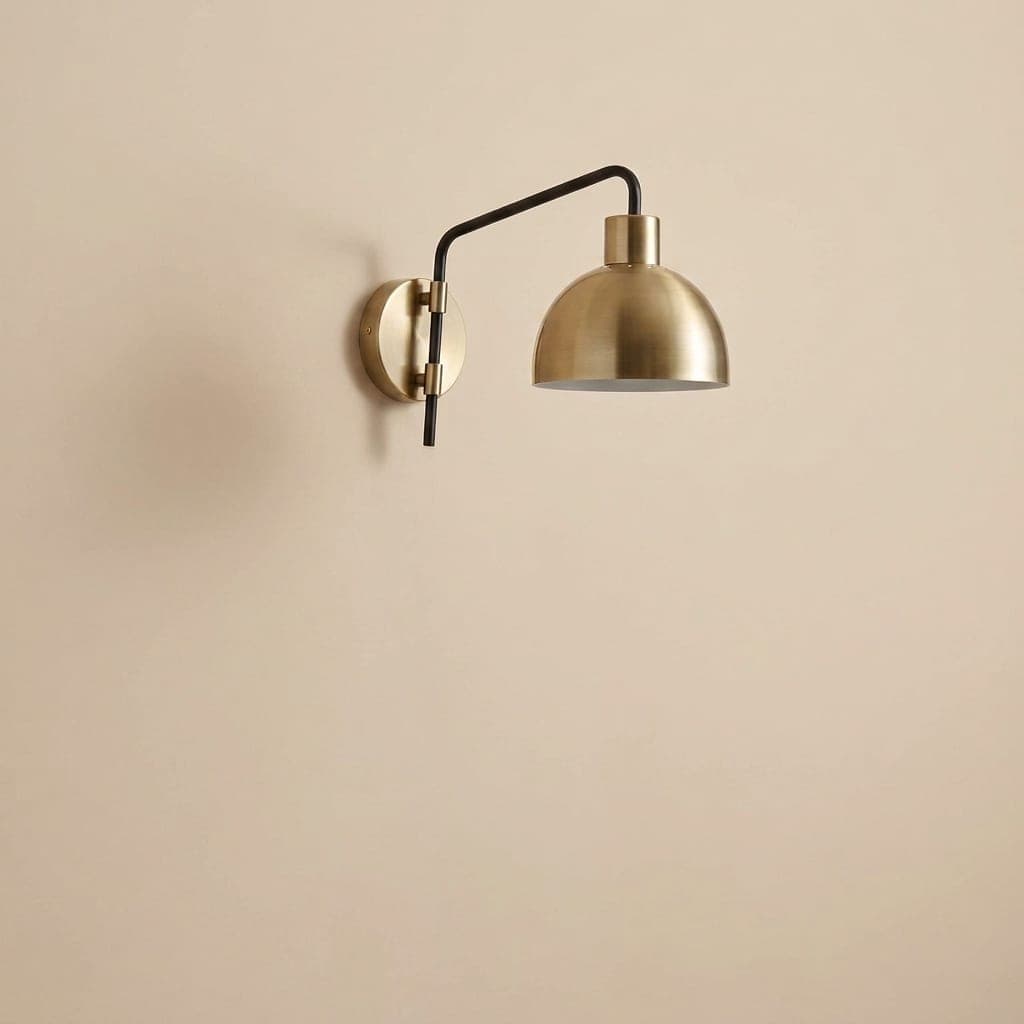
Globe Electric
Dimitri 1-Light Plug-In or Hardwire Sconce Antique Brass
Antique brass and matte black bring contrast to this versatile plug-in or hardwired wall sconce.
See merchant for current price
Check priceThe second swaps the metal shade for smoked amber glass. The light comes through the glass warm and slightly tinted, which is a different quality of light entirely — closer to candlelight than to a reading lamp. Better beside a chair than beside a bed, where you want to read.
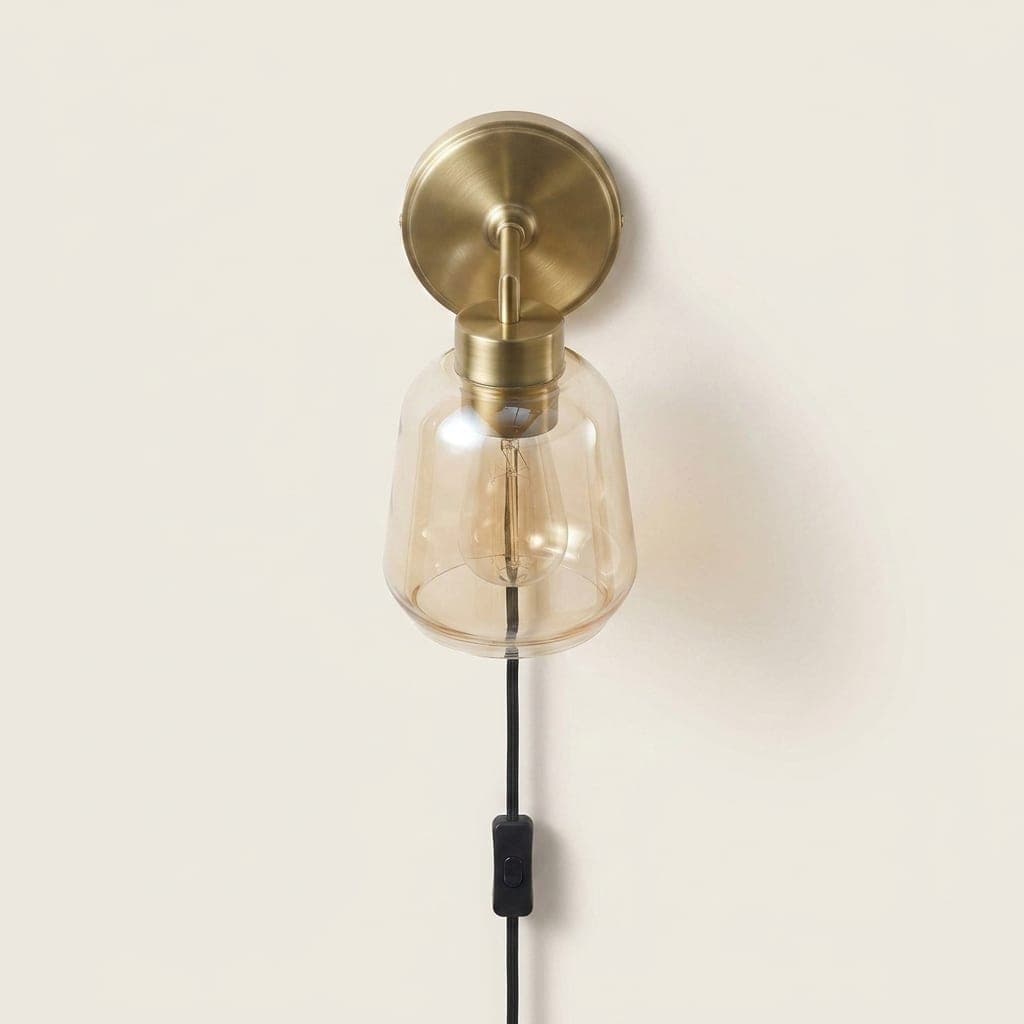
Globe Electric
Salma 1-Light Plug-In Sconce Matte Brass Smoked Amber Glass
A matte brass wall sconce with smoked amber glass for a touch of vintage warmth.
See merchant for current price
Check priceThe sconce that is not a sconce
If what you want lit is a picture rather than a chair, the same logic applies with a different fixture. A plug-in picture light mounts to the wall or the frame, runs a cord to the outlet, and puts a wash of light down the artwork. It turns a print you liked into the thing the room is arranged around, and it does it without touching the wiring.
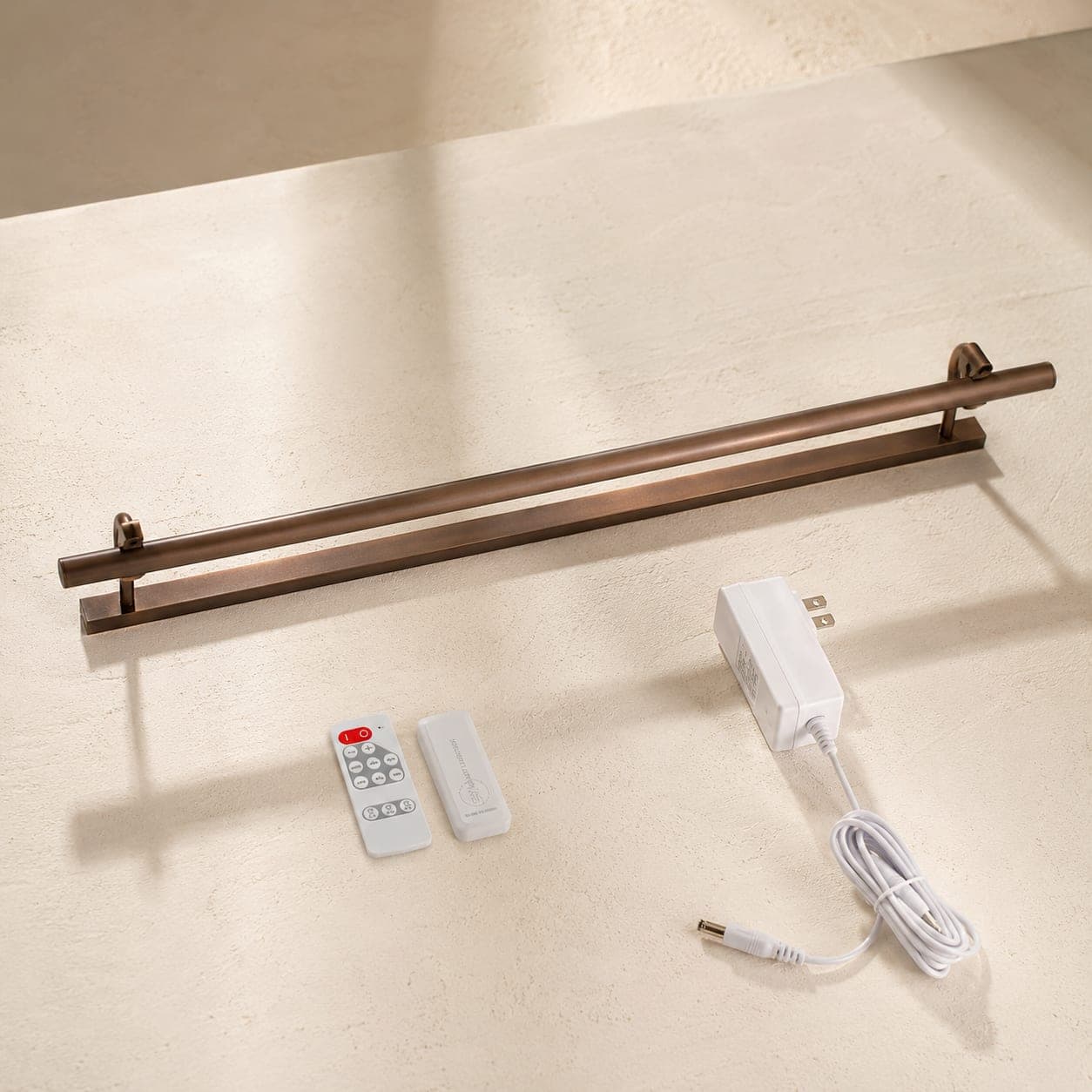
Situ Lighting
Vision Series Plug-In LED Art and Picture Light 3000K
A slim, remote-controlled LED picture light that puts your favorite artwork in focus.
See merchant for current price
Check priceWhen you cannot even put a screw in
Some leases forbid holes altogether. In that case the answer is not a sconce at all — it is a cordless lamp that sits where a sconce would have gone. On the nightstand, on the windowsill, on the shelf above the bed. It charges on a base and runs for an evening, and there is no cord to hide because there is no cord.
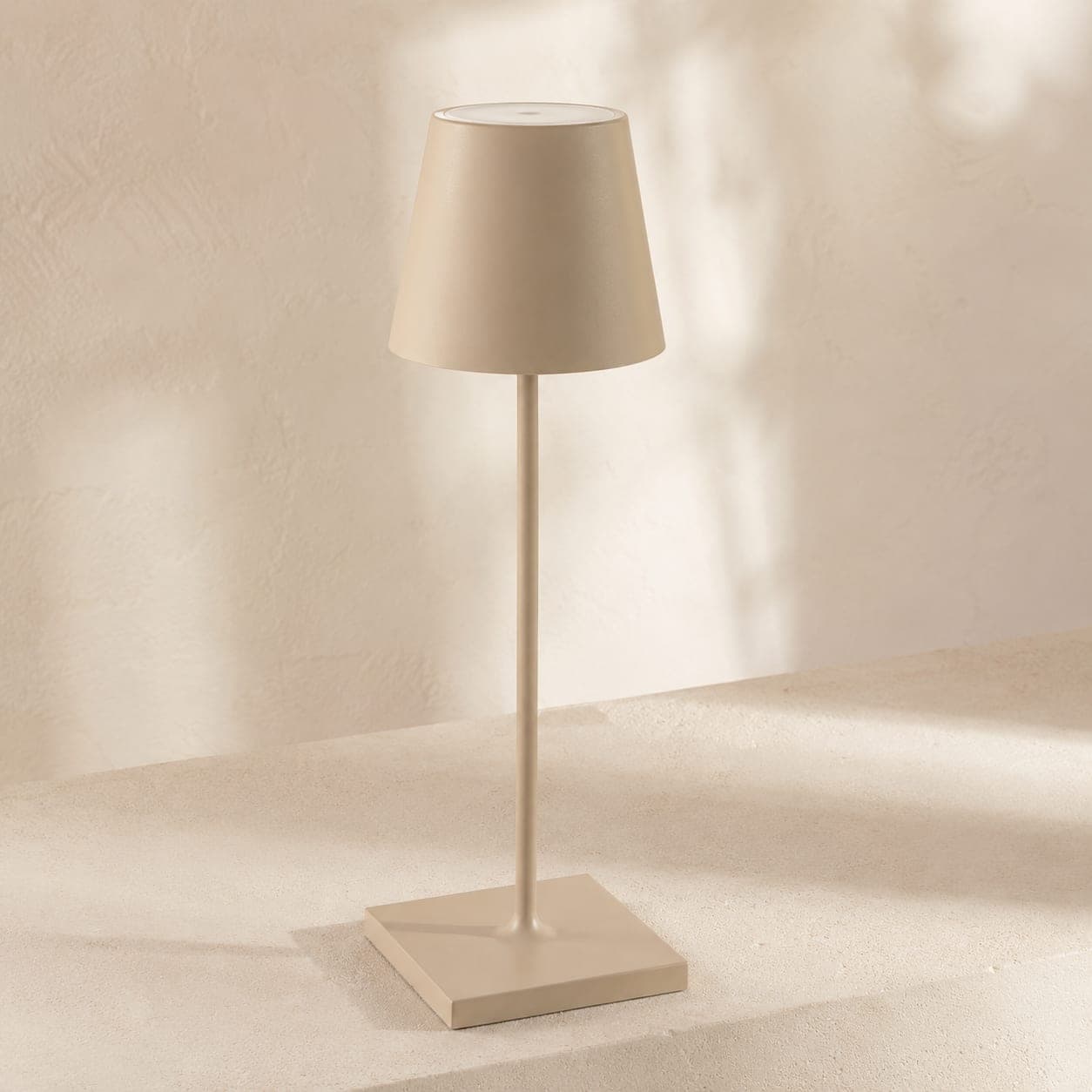
Zafferano
Poldina Pro Sand
A rechargeable, dimmable table lamp in a soft sand finish, with no trailing cord.
See merchant for current price
Check priceMounting, in thirty seconds
Two screws into drywall anchors. Mark the holes with the fixture held against the wall, drill, tap the anchors in, screw the plate on, hang the sconce, plug it in. The whole thing takes less time than reading this paragraph.
Fill the holes with a fingertip of spackle when you move out. Nobody has ever lost a deposit over two anchor holes behind where a bed was.
Shop the look
Bedside, without the rewiring
- Shop
Globe Electric
Dimitri 1-Light Plug-In or Hardwire Sconce Antique Brass
See merchant · price may differ at merchant
- Shop
Globe Electric
Salma 1-Light Plug-In Sconce Matte Brass Smoked Amber Glass
See merchant · price may differ at merchant
- Shop
 Shop
Shop
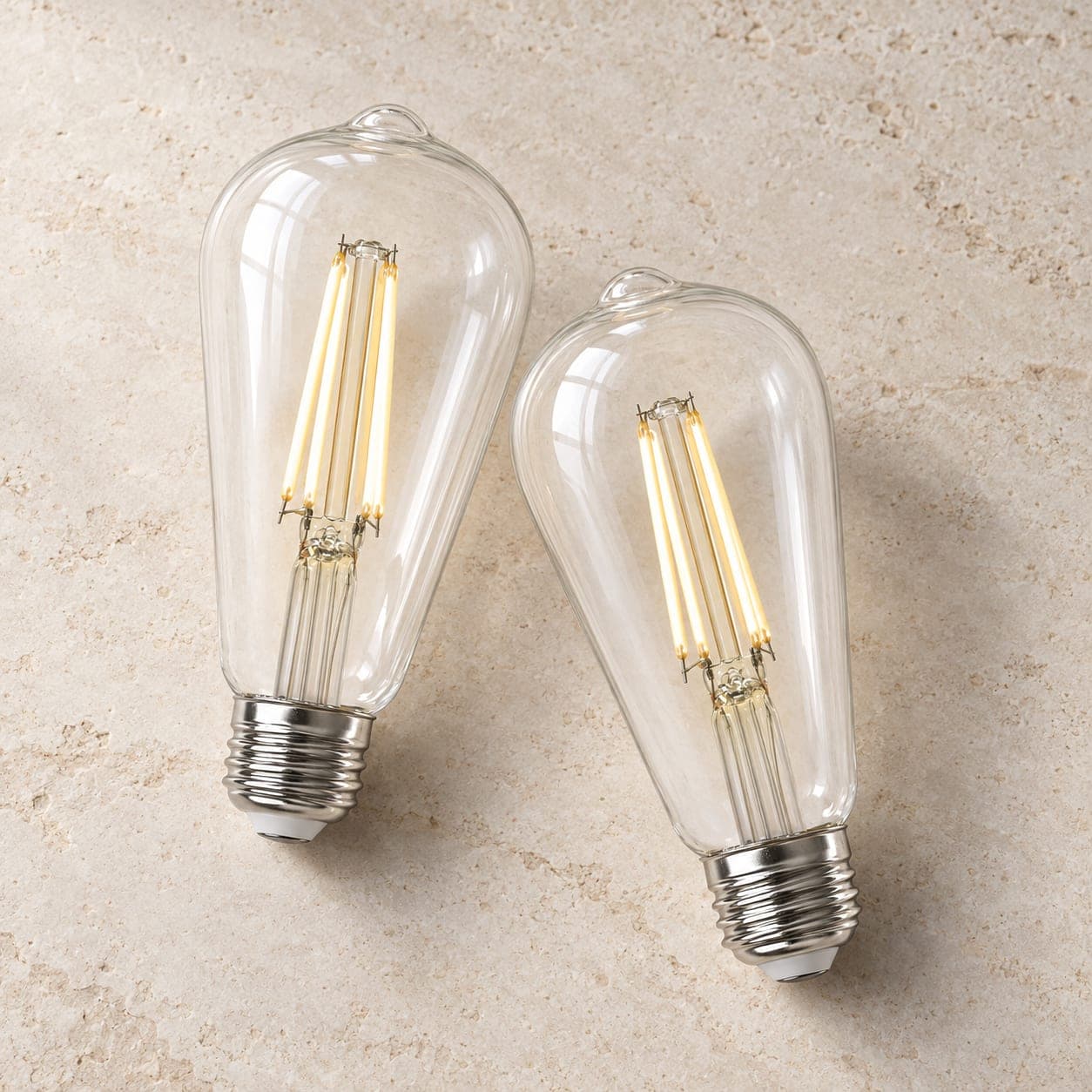
One last thing: put a warm bulb in it. A plug-in sconce with a cool white bulb looks like a hospital corridor. 2700K or lower, dimmable if the fixture allows it. The fixture is the shape; the bulb is the light.